
Electric PTO clutches are one of the most important components on modern lawn tractors, zero-turn mowers, and commercial turf equipment. If your mower deck suddenly stops engaging or the blades refuse to spin, there is a good chance the electric PTO clutch is the component responsible.
Understanding how an electric PTO clutch works, the warning signs of failure, and how to identify the correct replacement can save time, money, and unnecessary downtime during mowing season.
This guide explains everything you need to know about electric PTO clutch systems used on lawn mowers and commercial mowing equipment.
What Is an Electric PTO Clutch?
An electric PTO clutch (Power Take-Off clutch) is an electromagnetic device mounted to the engine crankshaft of a mower. When activated, the clutch engages and transfers power from the engine to the mower deck belt, allowing the blades to spin.
Unlike older mechanical engagement systems, modern mowers use electric PTO clutches because they allow smooth engagement and simple operator control.
Most commercial and residential mowing equipment uses an electric PTO clutch assembly that includes:
- An electromagnetic coil
- A rotating pulley
- A clutch rotor and armature
- Bearings
- Wiring connector
When the operator pulls the PTO switch, electrical current energizes the clutch coil. The magnetic field pulls the clutch plates together and engages the pulley, transferring power to the mower deck.
Most commercial and residential mowing equipment uses a plug-and-play wire connector for quick electrical hookup.
Where Electric PTO Clutches Are Used
Electric PTO clutches are found on many types of equipment including:
- Zero-turn mowers
- Lawn tractors
- Commercial turf mowers
- Garden tractors
- Commercial landscape equipment
Major manufacturers that commonly use electric PTO clutch systems include:
- John Deere
- Husqvarna
- Cub Cadet
- Toro
- Exmark
- Scag
- Grasshopper
- Ferris
- Gravely
- Bad Boy
Because many mower manufacturers use shared clutch designs, a single PTO clutch replacement may cross-reference multiple OEM part numbers.
How an Electric PTO Clutch Works
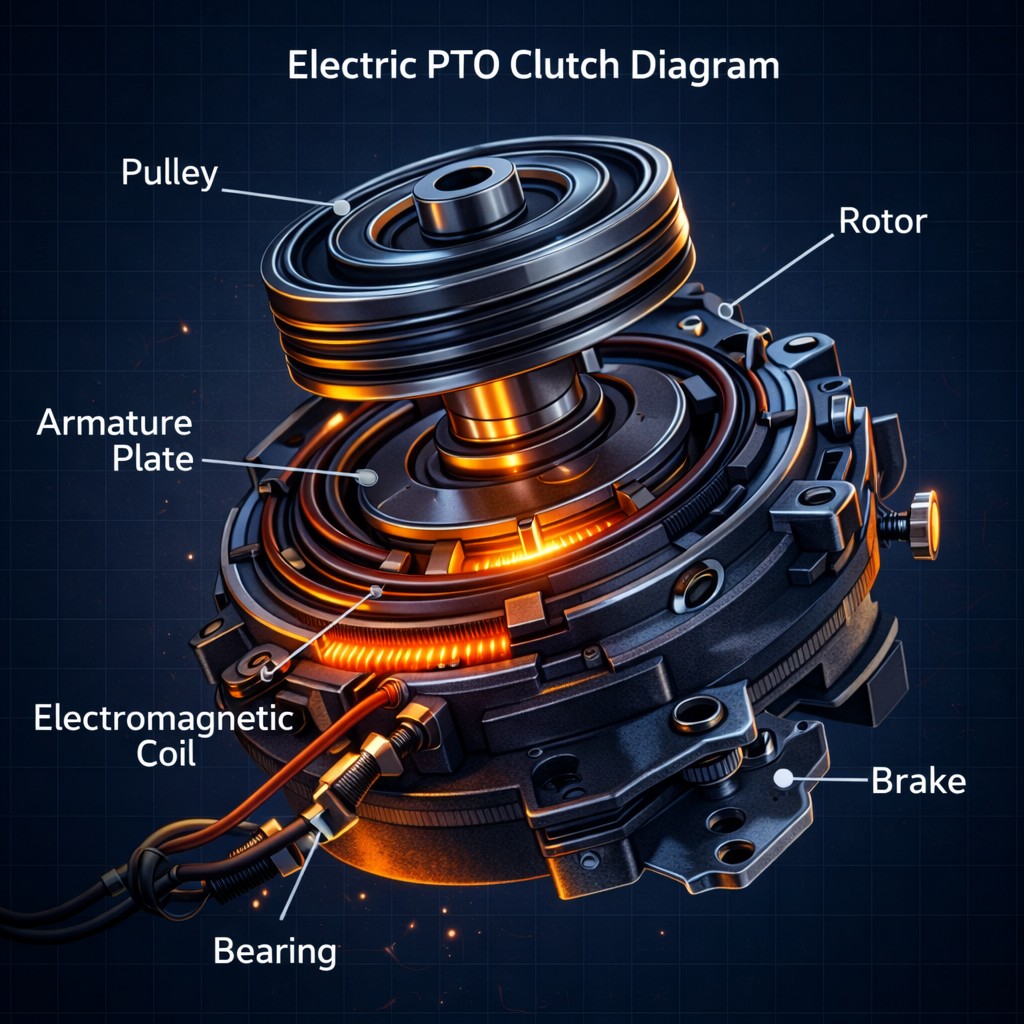
The operation of an electric PTO clutch is based on electromagnetic engagement.
Here is a simplified explanation:
- The operator activates the PTO switch.
- Electrical current flows to the clutch coil.
- The coil generates a magnetic field.
- The magnetic force pulls the armature plate against the rotor.
- The pulley locks to the engine shaft and begins spinning the mower deck belt.
This engagement process happens almost instantly, allowing the mower blades to begin rotating smoothly.
Many modern PTO clutches also include thermal protection systems that disengage the clutch if overheating occurs.
Common Electric PTO Clutch Failure Symptoms
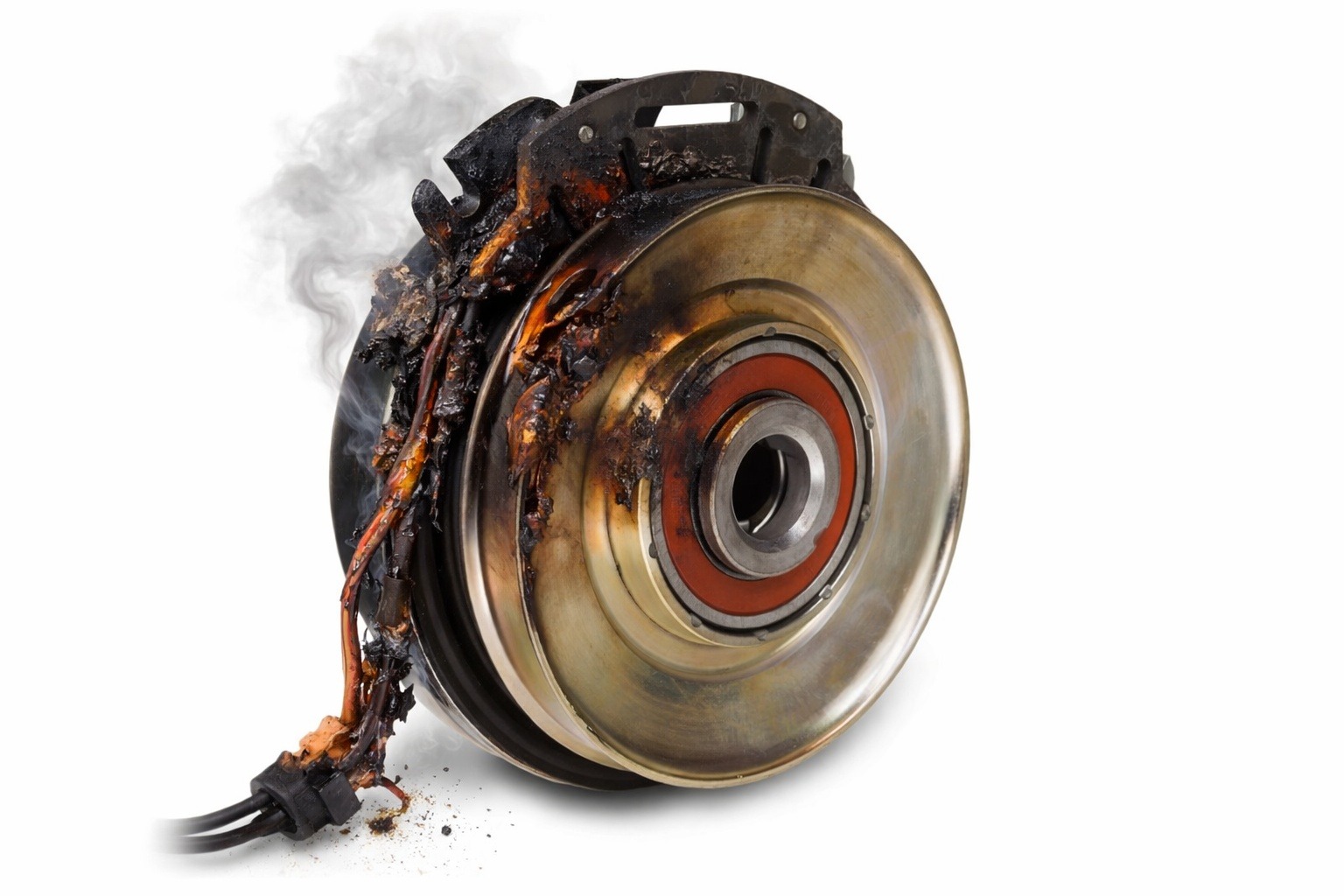
Electric PTO clutches are durable but eventually wear out due to heat, friction, and bearing stress.
Common signs of a failing PTO clutch include:
Mower Blades Will Not Engage
One of the most obvious symptoms is when the PTO switch is activated but the blades do not spin.
This may indicate:
- Coil failure
- Electrical wiring damage
- Internal clutch wear
Loud Grinding or Screeching Noise
A worn clutch bearing often produces a loud grinding noise when the engine is running.
Ignoring this issue can eventually damage the engine crankshaft.
Burning Smell From Under the Mower
An overheating clutch can produce a noticeable burning odor. This may happen when:
- The clutch slips under load
- The internal coil overheats
- Bearings begin to fail
Blades Engage Intermittently
If the blades engage sometimes but not consistently, the clutch coil may be weakening or electrical connections may be failing.
Why PTO Clutches Fail
Several factors contribute to electric PTO clutch failure.
The most common causes include:
Heat
Clutches generate significant heat during operation. Extended mowing in high temperatures can accelerate wear.
Bearing Wear
The internal bearing allows the pulley to rotate smoothly. When bearings wear out, the clutch begins to vibrate and produce noise.
Electrical Coil Damage
If the electromagnetic coil burns out, the clutch can no longer engage.
Overloading
Running oversized mower decks or striking obstacles can place excessive stress on the clutch.
If you’re trying to determine whether your clutch is already beyond repair, our guide on how to diagnose a failing electric PTO clutch walks through the exact tests technicians use.
How to Identify the Correct PTO Clutch Replacement
When replacing an electric PTO clutch, the most reliable way to confirm compatibility is by matching the OEM part number stamped on the original clutch.
Important specifications to verify include:
- Pulley diameter
- Crankshaft bore size
- Rotation direction
- Bolt pattern
- Wiring connector style
Many replacement PTO clutches cross-reference multiple OEM part numbers, allowing one unit to replace several original manufacturer components.
Matching the original part number is the safest way to ensure the replacement clutch fits correctly.
Can You Replace an Electric PTO Clutch Yourself?
In many cases, replacing a PTO clutch is a straightforward repair.
Basic steps typically include:
- Disconnect the mower battery.
- Remove the mower deck belt.
- Unbolt the clutch from the engine crankshaft.
- Disconnect the wiring harness.
- Install the new clutch assembly.
- Reattach the belt and wiring.
However, torque specifications and installation procedures can vary depending on mower model.
Always follow the manufacturer’s service guidelines when installing a replacement electric PTO clutch.
Final Thoughts
Electric PTO clutches play a critical role in modern mowing equipment. When functioning properly, they allow smooth blade engagement and efficient power transfer from the engine to the mower deck.
Understanding how electric PTO clutch systems work, recognizing failure symptoms, and verifying replacement compatibility can help equipment owners avoid unnecessary downtime.
For anyone maintaining commercial mowing equipment or residential lawn tractors, knowing how to diagnose and replace a PTO clutch assembly is an important part of keeping equipment operating reliably.
Technician Insight
One of the biggest mistakes mower owners make when diagnosing a PTO clutch problem is assuming the clutch itself has failed first. In reality, technicians often start by checking voltage at the clutch connector, inspecting belt tension, and verifying that the deck spindle bearings rotate freely. A PTO clutch is designed to engage with significant magnetic force, so if the electrical system and belt drive are functioning correctly, the clutch will usually operate reliably until its internal bearing or electromagnetic coil reaches the end of its service life. Understanding these diagnostic steps can prevent unnecessary parts replacement and help identify the real cause of engagement problems.
Frequently Asked Questions About Electric PTO Clutches
What causes a PTO clutch to stop engaging?
A PTO clutch may fail to engage due to a burned-out electromagnetic coil, damaged wiring, a faulty PTO switch, or worn internal clutch components. Electrical issues are often the first thing technicians check when diagnosing PTO clutch problems.
How many volts does a PTO clutch use?
Most lawn mower electric PTO clutches operate on a 12-volt electrical system supplied by the mower’s battery and charging system. When the PTO switch is activated, the clutch coil receives voltage and creates the magnetic force needed to engage the clutch plates.
Can an electric PTO clutch be repaired?
In most cases, PTO clutches are not repaired because the internal components are sealed and not designed for rebuilding. When the coil, bearing, or friction surfaces fail, replacing the clutch assembly is usually the most practical solution.
How long does a PTO clutch typically last?
Most electric PTO clutches last between 500 and 1,000 hours of operation depending on mowing conditions, belt tension, and maintenance. Commercial mowing equipment that engages and disengages the clutch frequently may experience shorter service life.
How can you test a PTO clutch?
Technicians typically test a PTO clutch by checking for proper voltage at the clutch connector, measuring coil resistance with a multimeter, and inspecting the pulley bearing for noise or wobble. If voltage is present but the clutch does not engage, the internal coil may be defective.
This guide is part of an ongoing series covering electric PTO clutch diagnostics, maintenance, and replacement for lawn tractors and commercial mowing equipment.